Daguerre Gives Birth to Dali
It's March 25, 2026 and I find myself reflecting on the place of photography in today's world. I'll start with a memory.
November 18, 2011 marked the 224th anniversary of the birth of Louis Daguerre.
I woke up that morning to see that Google had produced a front page "Doodle" in honor of Louis Daguerre's birthday. While I admit to being puzzled as to the significance of his 224th birthday (why not wait for 225?), nonetheless it piqued my interest, and I wrote about it on my website; suggesting that photography would re-invent itself to be more real rather than pursuing Photoshop or in-camera effects and the like.
As some of you may know, through the 80's and 90's I was privileged to work as a commercial photographer for many of the world's leading high-tech companies. What some may find surprising is that my interest in photography began largely as a result of a fascination with old photographs and the window they provided into a very different world.
Daguerre's creation changed the way mankind saw the planet; not just through the introduction of the photograph, but also by changing the very nature of the visual arts.
Introduced in 1839, the Daguerreotype photo process started a 20 year sequence of events that resulted in more and more accessible photographic processes… most importantly, the negative which allowed multiple copies to be made. The Daguerreotype led directly to the art of Picasso; a new way of seeing a fragmented world of components. Not bad for a chemical process that yields a fragile image that can only be viewed at an angle.
For hundreds of years, artists had been judged largely on their draughtsmanship..., the ability to draw accurately, and render a “correct" image of the subject was the mark of talent. Perspective was conquered, control of shadow introduced a three dimensional quality to painting, and by the beginning of the 1800's most portrait artists could create a fair likeness of their subject. The best artists received the best portrait commissions. From Dürer to David, artists and clients sought reality or at least the sense of reality. Then, like an atom bomb, photography made obsolete the whole adventure. Photography was realistic and the most perfect of paintings was but an impression.
Photography destroyed and liberated painting. No painter could match the accuracy and detail of a fine photograph. By the 1860's photography was becoming cheaper and commonplace, to the point that the enlisted men of the Civil War armies would obtain portraits to be sent home to their families. It's no accident that the dominance of photography as a portrait medium coincided with the explosion of creative ideas represented by Monet, Renoir, and others.
From the 1860s on, photography's progress was a steady march of faster film, shorter shutter speeds, better lenses that arguably culminated in the work of Cartier-Bresson. Karsh would capture the decisive moment in his portrait of Churchill. Adams would show us the f64 beauty of the American West.
During the same period, painting as a plastic art continuously re-invented itself. The impressionists made us feel the elements of a time and place..., Picasso broke our world into fragments that we'd never noticed before, Einstein explained general relativity, and Dali disturbed the time-space continuum.
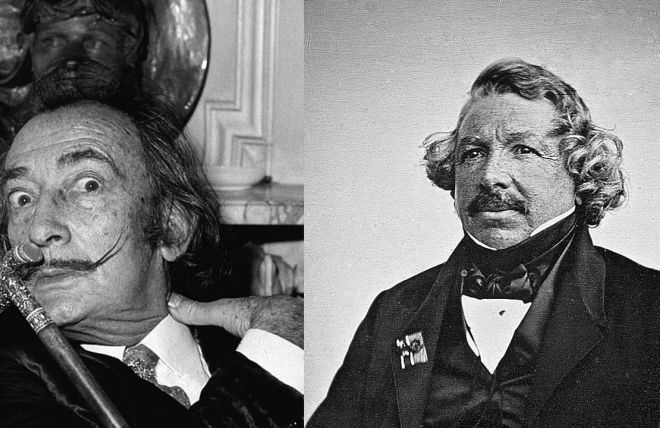
A new technology (photography), changed an old technology forever and allowed it to morph into something new. Without Daguerre, there could be no Dali.
From the 90’s, photography was challenged by Photoshop, CGI rendering, and all the tools that digital technology put at our disposal, in the same way that painting was challenged by photography.
I won't kid you..., photographs have ALWAYS lied. I spent a good number of years and made a good living by making photos that represented people, products, and ideas in a positive light..., the light I chose. The difference is that by 2020 the general population subjectively understood that a photo could not be entirely trusted.
Through the 2000’s, if an actress appeared on the cover of People magazine, we simply did not know if that's what she looked like. Is she taller, shorter, older, younger? There's no way to tell..., instead, she had become an avatar for whoever or whatever the editors tell us she is.
And then suddenly we had AGI. Digital imaging became as quaint as oil paint or pointillism. Recent estimates suggest that as much as 50% of online imagery in some fields is produced by generative AIs. These are visual hypotheses of events that have never existed… constructed memes that represent a particular cliché as affirmed by word-frequency prediction engines designed to mirror, flatter, and engage us by their familiarity. A recent study by the New York Times suggests many prefer AI to human authorship. Other studies in neuroscience over the past few years suggest that the human brain works like a prediction machine. It may be that AI engages us precisely because it produces what feels expected, anticipated, and predictable and our brain is comforted; not challenged by that fact. Even though the AI image is fantasy, it looks a s expected and the brain is satisfied.
Whither goest thou photography? For perhaps a 1/60th of a second, a photograph is a truth, evidence, a real event (manipulated or not), touched and defined by light. It possesses physicality that a physicist can appreciate. A photograph is an event that exists in the time-space continuum, and the future(s) fork from there. Let’s treasure that and embrace provenance. Provenance is everything. An AI generated image of “fierce D-Day paratrooper” is nothing. A walk across the beaches of Normandy touches the soul and can kindle emotion years later.
I received a gift 50 years ago (a book actually), that I treasure today. It and the experience of receiving it exist on the continuum of fact. Its value is far greater than any hypothesis of what it might have looked like if it had been a gift of great financial value. A hypothesis of a non-event has no more value than the last 5 seconds of a dream where you were an astronaut and then awoke.
It may be that the great gift of photography in coming years will be the gift of provenance and truth.